
The Sharp Peak (蚺蛇尖), or Nam She Tsim, is a hill inside Sai Kung East Country Park, north of Tai Long Wan, in the Sai Kung Peninsula in Hong Kong. It is well known for its well-defined sharp peak, which rises to a height of 468 metres (1,535 ft) above sea level. Sharp Peak is generally considered the hardest hike up in Hong Kong because of its remoteness and steepness. Yet, we had a wonderful group hike at this most difficult peak on a beautiful October day (and night) of 2025. Continue reading
Author: Zi Yang Meng
PHYS8202: Quantum Many-Body Computation

HKU PHYS8202: Quantum Many-Body Computation
Purpose of the Course:
Computational approaches are playing increasingly important roles in the advances of condensed matter physics and quantum material research, particularly in quantum many-body systems. In recent years, a new trend of research, combining computational methods, such as exact diagonalization, quantum Monte Carlo, tensor network and neural network, and theoretical approaches such as quantum field theory and symmetry analysis, has emerged and enabled scientists to thoroughly, and in an interdisciplinary manner, investigate the highly entangled quantum phases of matter, 2D moiré materials, quantum simulators, etc. Considering these rapid developments and their lack of systematic education to senior undergraduate students, graduate students and researchers in Hong Kong and the GBA area, I have designed this course to cover from basic to advanced topics in quantum many-body computation and theoretical understanding in strongly correlation aspects of quantum materials. I plan to teach the participants basic and live knowledge of modern quantum many-body computation, such that they can apply them into their research works in the corresponding areas.
Lecturer: Zi Yang Meng
Tutor: Min Long, Shibo Shan
PHYS4150/8150: Computational Physics
HKU PHYS4150/8150: Computational Physics
Purpose of the Course:
This course shows the power of the computational approach to solving physics and related problems, which is complementary to the traditional experimental and theoretical approaches. Students are expected to spend a significant fraction of time in actual programming. This is an elective course for the computational physics theme. This is also an essential course for those who plan to pursue postgraduate studies in fields like computational physics, condensed matter physics, chemistry, and engineering or work in related areas.
Lecturer: Zi Yang Meng
Tutor: Tim Lok Chau, Menghan Song
PHYS3151: Machine learning in Physics
HKU PHYS3151: Machine Learning in Physics
Purpose of the Course:
Machine learning is a technique that enables computers to learn without being explicitly "programmed''. It is an essential part of big data science and has been widely used in different fields of physics. This course introduces the basics of machine learning, from key concepts to practical algorithms, with a focus on real-world applications in physics. It is an elective course for the computational physics theme. This is also an essential course for those who plan to apply machine learning techniques in their postgraduate studies such as condensed matter physics and astrophysics or in their future work.
Lecturer: Zi Yang Meng
Tutor: Tim Lok Chau
AI and quantum physics (and ancient Greece and mahjong)
In this interview with HKU science editor, Dr Pavel Toropov, Professor Meng explains why AI is now indispensable in quantum physics research – by allowing us to circumvent the need for enormous computational complexity, AI can help to make breakthroughs and in the process help us to understand better of mother nature and ourselves. This leads to discoveries of quantum materials whose properties, such as superconductivity and entanglement, can change the world. The technology may be cutting edge, but the principles involved, says Prof Meng, go back to ancient greek maxim - know thyself, and the whole thing is similar to playing mahjong. Click here for the interview.
 |
 |
|---|
旧锦新样 | 寂静春天里的动力学
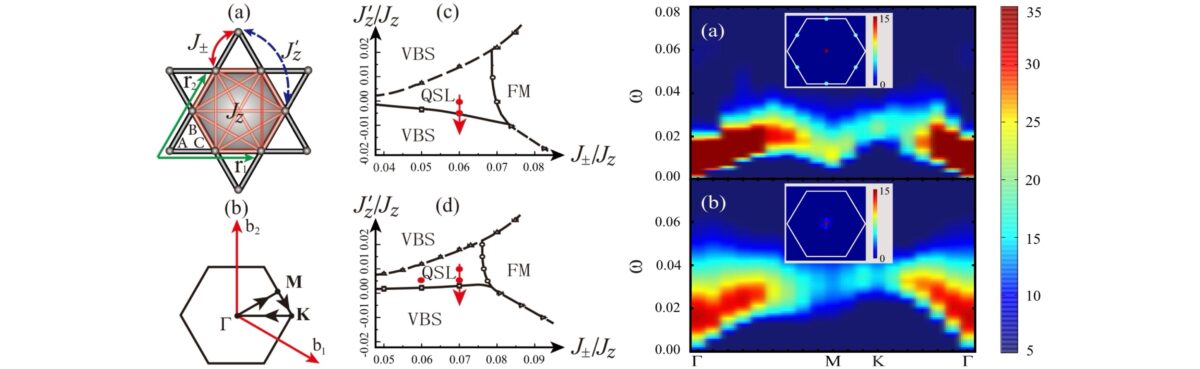
在这样混乱嘈杂的春天里,哪里能找到寂静,哪里能找到新的生机酝酿时静默却不可阻挡的力量,是考验从业人员实力、修为和气魄的大问题。春天当然是动态的,但是动态要有一个静的表面,新发现孕育的时候如林间的野花幼苗,阳光雨露之下静却决绝。一开始就熙熙攘攘热热闹闹,混淆了心智,耗尽了力气,怎么可能看到成熟和收获呢? 就是在这样的考虑之下,笔者和朋友们决定在凝聚态物理学量子多体计算的领地中,在这个春天里培育一株幼苗,小心地浇灌它,期望它成长为凝聚态物理学量子多体计算领地中的大树。这株幼苗,就是量子多体系统的动力学性质计算。 Continue reading
 |
 |
|
 |
|---|
旧锦新样 | 百年孤独和一级相变
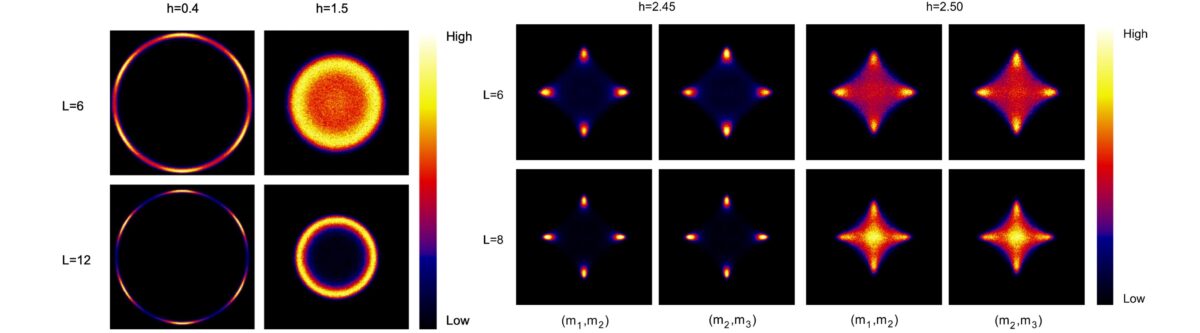
编者按:最近某次关于分数陈绝缘体相变问题的讨论,涉及到多体系统作用量三阶项会导致一级相变的故事,勾起笔者对一段往事的追怀,想起八年前这篇游戏文字。文字背后的物理现象是在阻挫三角晶格横场 Ising model 量子临界点上,作用量三阶项消失,QCP 展现 emergent continuous symmetry;而在阻挫六角晶格横场 Ising mode 的量子临界点上,作用量三阶项不消失,QCP 为一级相变。这个故事背后的研究论文是 [Phys. Rev. B 96, 115160 (2017)]。类似的故事,笔者和合作者最近研究三角晶格量子环路模型相图的工作中,亦有所体现 [Commun Phys 7, 207 (2024) 和 情愿不自由,便是自由了 | 量子多体中的呐喊与彷徨之十二]。不想如今这样的现象又在分数陈绝缘体相变问题中改头换面地出现。可见马尔克斯百年孤独的经典开头诚不我欺,“多年之后面对 ……” 这样的事情,在个人的生命历程中总是反复地出现,一如身处的环境总在重复其文化历史基因中的错误一样。值得记取的教训,除了马贡多小镇无法摆脱的悲剧宿命和多体系统作用量三阶项会导致一级相变,恐怕还是“学好蒙特卡洛,不会被忽悠”。 Continue reading
 |
|---|
JOIN US NOW: Post-doctoral Fellow

Post-doctoral Fellow in Computational and Theoretical Condensed Matter Physics in the Department of Physics
JOIN US NOW: Research Assistant Professor

Research Assistant Professor in Quantum simulation, 2D quantum materials, quantum many-body entanglement in the Department of Physics
Advanced computing system ‘Blackbody’ for solving the challenging physics problems
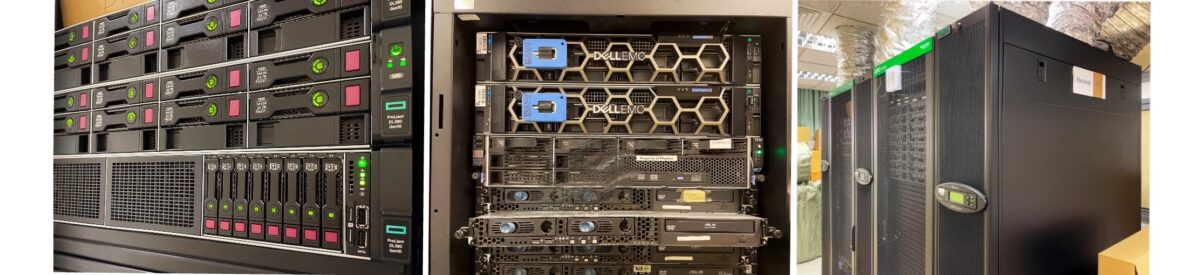
To pursue advances in astronomy, quantum physics, and interdisciplinary science, our research teams worked together to deploy a new supercomputing system, named ‘Blackbody’ supercomputer -- the name stems from their respective research topics of ‘Black hole’ and ‘Quantum many-body‘ physics. The system has been set up in fall 2022 and is currently in full operation. Thank you for the hard work and Congratulations for all the participants! Continue reading
 |
|---|