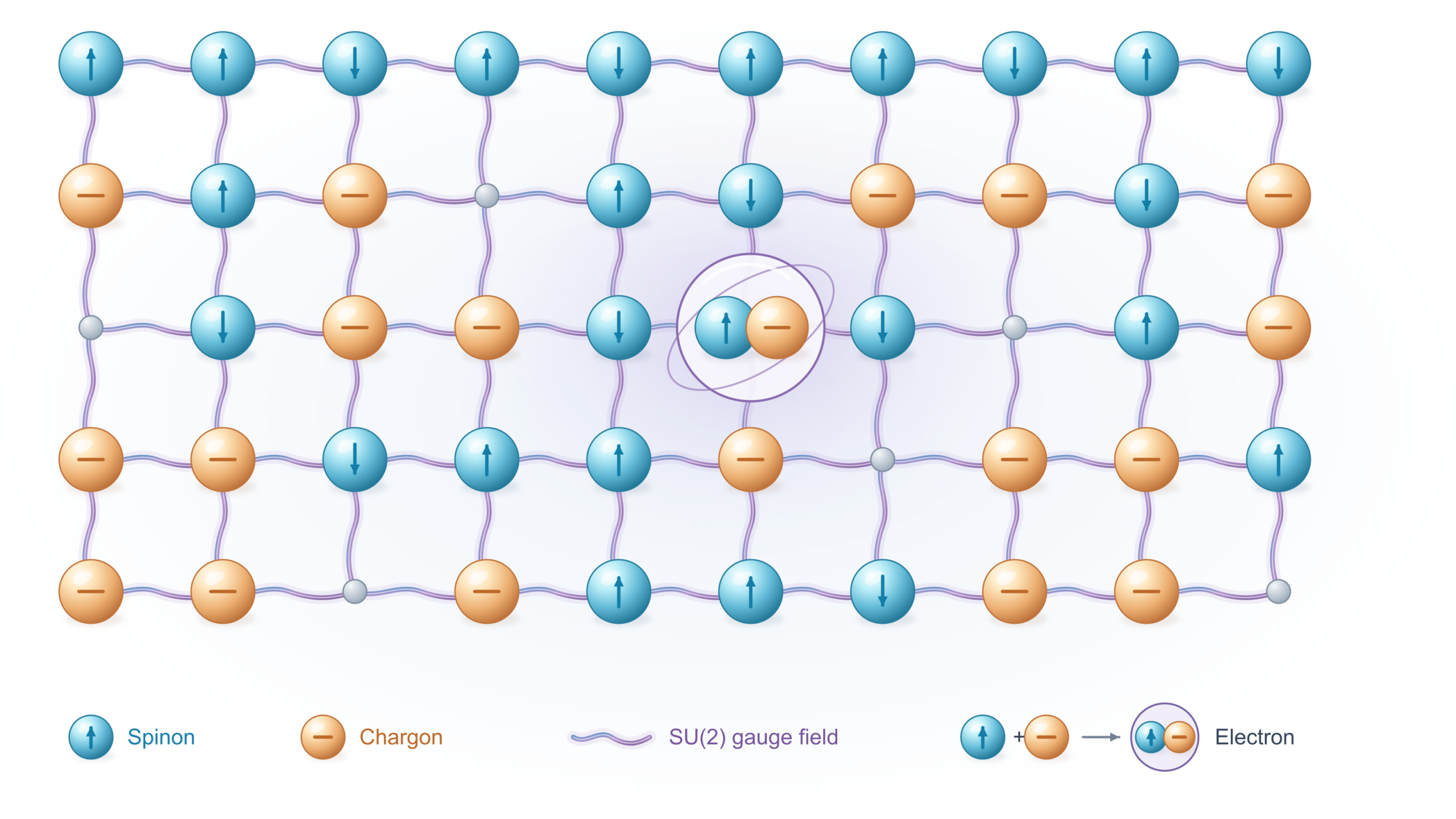
Dr Chuang Chen and Professor Zi Yang Meng from The University of Hong Kong, together with Professor Subir Sachdev from Harvard University, used quantum Monte Carlo simulations to investigate how an antiferromagnetic insulator can transform directly into a nodal d-wave superconductor. Their results support a continuous quantum transition in which emergent excitations carrying spin and charge separately become central to the physics. Published in PNAS, the study provides new numerical evidence for ideas about electron fractionalisation and a starting point for exploring the cuprate phase diagram. The simulations concern a simplified model at zero doping; the extension to finite doping remains a theoretical proposal and is currently under their numerical investigation. Continue reading