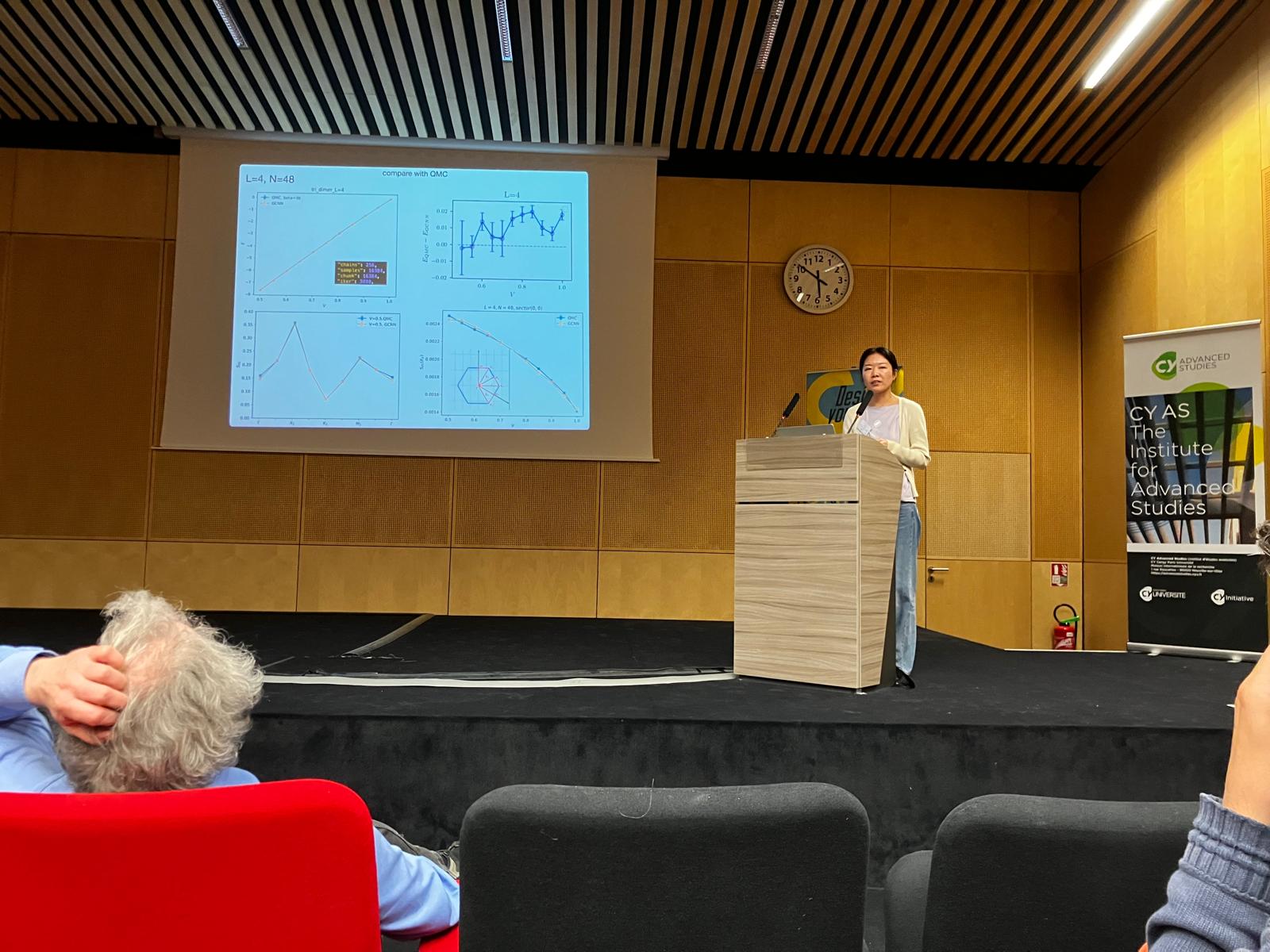
Venue: Maison internationale de la recherche, Cergy-Pontoise, France
Date: May 11 to 13 2026
Introduction:
Quantum materials are the cornerstones of many near-future applications including new computing chips, energy or quantum computing platforms. The success of these future applications depends heavily on a detailed understanding of the microscopic quantum phenomena at play. Unfortunately, the quantum advantage ultimately emanating from the entanglement between microscopic degrees of freedom comes with an exponential complexity when one needs to perform accurate modeling of quantum materials. Advanced complementary numerical methods ranging from quantum Monte Carlo, exact diagonalization to tensor network and machine-learning techniques aim at fighting this complexity and to unveil the microscopic mechanisms in strongly entangled quantum matter. The purpose of this workshop is to bring together researchers working in this and related fields, to review the state of the art, and to discuss future directions.
Speakers (alphabetized by last name):
Fakher Assaad, Julius-Maximilians-Universität Würzburg, Germany
Nils Çaçi, École Normale Supérieure, Paris, France
Zhou Chengkang 周成康, The University of Hong Kong
Maria Daghofer, Universität Stuttgart, Germany
Zakari Denis, EPFL, Switzerland
Tian Lan 蘭天, The Chinese University of Hong Kong
Laura Messio, Sorbonne Université, France
Jacopo de Nardis, Laboratoire de Phyisque Théorique et Modélisation, CY Cergy Paris Université & Collège de France
Nicolas Laflorencie, Laboratoire de Physique Théorique, Université de Toulouse, France
Philippe Lecheminant, Laboratoire de Physique Théorique et Modélisation, CY Cergy Paris Université, France
David Luitz, Universität Bonn, Germany
Xiaoxue Ran 冉曉雪, Max Planck Institute for the Physics of Complex Systems, Dresden, Germany
Juchen Rong 榮俊臣, CPhT École Polytechnique, France
Attila Szabó, Universität Zürch, Switzerland
Filippo Vicentini, École Polytechnique & Collège de France
Haoxin Wang, The Chinese University of Hong Kong
Alexander Wietek, Max Planck Institute for the Physics of Complex Systems, Dresden, Germany
Jiarui Zhao 趙家瑞, The Chinese University of Hong Kong
Organising committee
Andreas Honecker, Laboratoire de Physique Théorique et Modélisation, CY Cergy Paris Université, France
Sylvain Capponi, Laboratoire de Physique Théorique, Université de Toulouse, France
Fabien Alet, Laboratoire de Physique Théorique, Université de Toulouse, France
Zi Yang Meng 孟子楊, Department of Physics, The University of Hong Kong
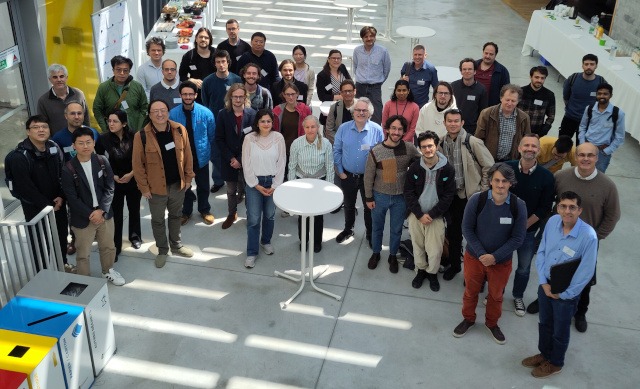
Group photo
Zhou Chengkang 周成康
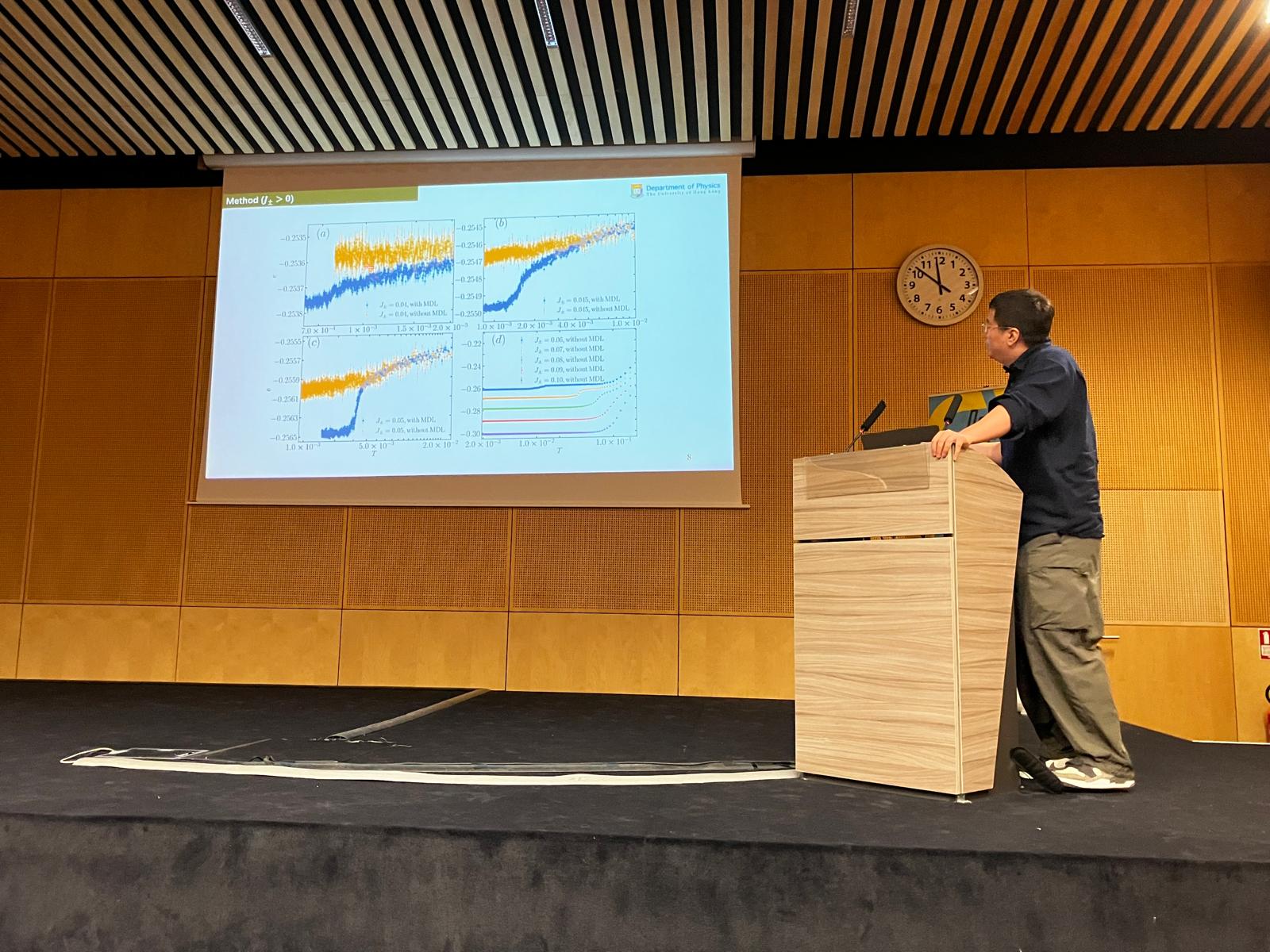
Xiaoxue Ran 冉曉雪